
by
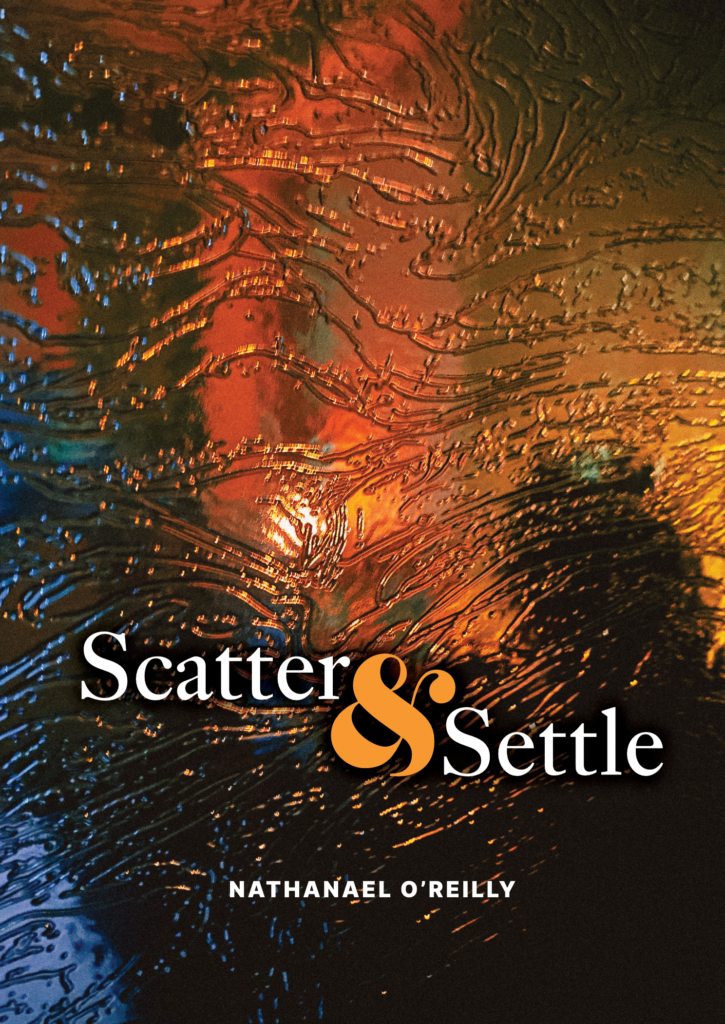
The fifty poems in Scatter & Settle traverse multiple locations and subjects, from Australia and the United States to Ireland and England, from Texas to Alaska, from Victoria to Central Europe. O'Reilly's poems investigate emigration, fatherhood, marriage, (un)belonging, gun violence, contemporary politics, environmental degradation, religion, the COVID-19 pandemic, friendship, conceptions of home, and the poet's past. O'Reilly utilises a range of poetic forms, including the duplex, sestina, cento, tanka, sonnet, erasure and pastoral, along with free verse lyrics and found poems, displaying a command of his craft and eagerness to explore, play, and push his poetics into new territory. The poems pay close attention to the details of experience, whether the poet is at home or travelling, using imagery and specificity to illuminate the extraordinary within the ordinary and critique narrow-mindedness, violence, exploitation and materialism. As a body of work, the poems in Scatter & Settle celebrate family, community, nature, movement, experience and the beauty of the everyday.
Anne Casey wrote:O'Reilly encounters the world with the carefulness of a spy or a professional eavesdropper. Here are poems that notice the moment, all the time documenting the strangeness of the landscape in which our lives unfold. What does it mean to belong? In what states of being do our various lost and found selves exist? ... [his poetry] bears witness to the pilgrim nature of a life that might be ours, and the timely question of how a person becomes remembered, in time and space, through the eyes of others.
Matt Hohner wrote:Painting vivid depictions of the landscapes he traverses and inhabits ... the poet threads his great love of family and friendships throughout his narratives. The universal traveller, O'Reilly slips easily into ancestral cadences, gliding between worlds with an ever-present longing. There is a deep and constant reverence and sensitivity here to his impact in the world, whether cultural, ecological, interpersonal, or regarding our own precarious mortality, although he does not shy away from the (sometimes explosively) political.
Paul Kane wrote:Nathanael O'Reilly's [poetry] ... reminds us that when at our best, we belong to the world at large, while fiercely holding our family and friends close to our hearts. A truly global poet, O'Reilly showcases the sometimes-fraught sense of twenty-first-century existence on earth with its thorny entanglements and cultural intransigence, countered by an abiding love bigger than continents or even time itself, and an interdependence without flags or borders.
Nicholas Birns wrote:Joseph Brodsky, the Russian Nobel laureate, once remarked that memory and art have in common the 'ability to select, a taste for detail.' In the work of Nathanael O'Reilly, memory and art come together to bring us poems that remember what cannot - what must not - be forgotten, in rich and telling detail and with a taste for quiet but incisive irony.
Nathanael O'Reilly's poems sound the major themes of Australian poetry: landscape, displacement, yearning, and above all a critique of cultural narrowness. O'Reilly's plain-spoken diction is often laced with understated wit, but is given ballast by its principled grounding in lived experience.


